
A stevia extract manufacturer should do more than quote a price per kilogram. The manufacturer must help a buyer identify the right steviol glycoside profile, connect the sample to a controlled commercial lot, and supply the documents needed for release. At HuachengBio, we supply H2-Via Stevia Extract in Rebaudioside A (RA) 50%-99% and Rebaudioside M (RM) 95% specifications for food and beverage development. Current inventory is matched to the requested grade, quantity, destination, and ship date rather than treated as a generic stock claim.
For procurement and formulation teams, the fastest route is to define the finished product first. Sweetness quality, process conditions, sugar-reduction target, and required certifications determine which grade should be sampled. This guide explains how to qualify bulk stevia extract from specification review through pilot production and repeat ordering.
Stevia extract is a family of ingredients, not one interchangeable powder. Rebaudioside A and Rebaudioside M have different sweetness curves and sensory behavior. Purity also affects dosage, handling, and cost in use. A request for "stevia extract" without a glycoside profile leaves too much open for a dependable quotation.
Our H2-Via Stevia Extract range includes RA 50%-99% and RM 95%, tested by HPLC. These options allow a development team to screen a practical RA grade, a high-purity RA grade, and RM 95% against the same sweetness target. The winning option is the one that meets the sensory brief at an acceptable finished-product cost.
Before we recommend a starting point, we need the product category, serving size, sucrose benchmark, target sugar reduction, pH, heat process, flavor system, and destination market. A flavored acidic drink, a dairy base, and a baked filling can require different answers even when the declared sweetness target is identical.
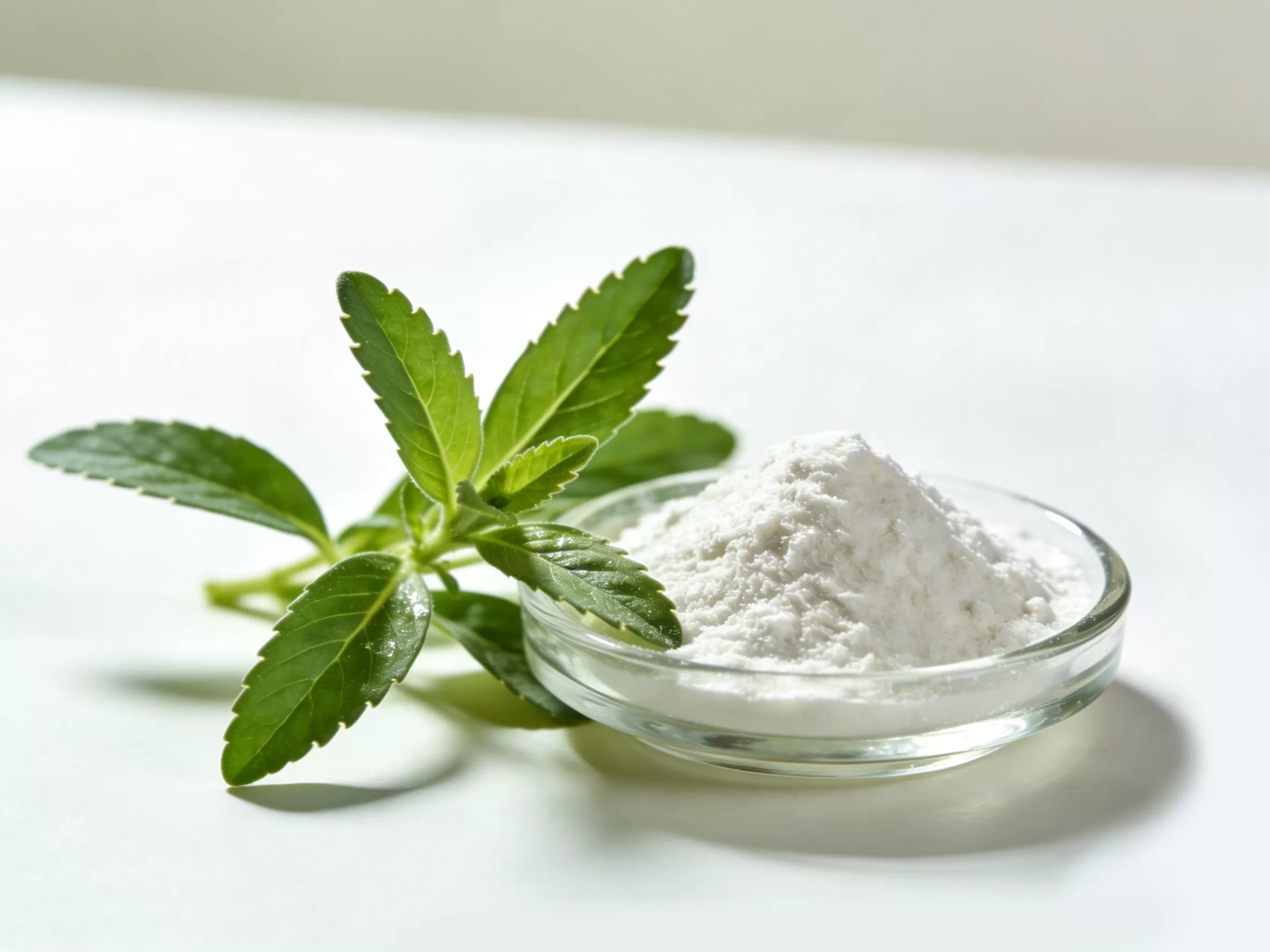
H2-Via is produced from Stevia rebaudiana (Bertoni) Hemsl leaves, with steviol glycosides as the active sweetening components. The offered material is a fine white powder. HPLC assay provides a clear basis for confirming the ordered RA or RM grade and comparing the sample with the commercial lot.
The values below are useful for initial supplier screening. The signed specification and lot COA supplied with a quotation remain the documents used for approval because test items, limits, and certificate scope must match the exact material being purchased.
| Item | Available specification | Why it matters to the buyer |
|---|---|---|
| Rebaudioside A | RA 50%-99% | Creates a range of purity, dosage, sensory, and cost options for application screening. |
| Rebaudioside M | RM 95% | Supports formulas that need a different sweetness profile and finish from conventional RA. |
| Assay method | HPLC | Connects the purchase specification, sample, and commercial lot to a defined test basis. |
| Appearance | Fine white powder | Supports visual and handling checks in dry blends and light-colored products. |
| Particle size | NLT 97% through 80 mesh | Influences dispersion, premix uniformity, and dosing consistency. |
| Heavy metals / arsenic | Below 10 ppm / below 1 ppm | Provides starting limits for the buyer's contaminant review. |
| Microbiology | TPC below 1,000 cfu/g; yeast and mold below 100 cfu/g | Supports food-ingredient qualification alongside the complete lot COA. |
RA is widely used when a project needs a familiar supply option and controlled sweetness cost. The broad RA 50%-99% range makes it possible to balance assay, dose, and budget. At higher sweetness replacement levels, the formulator should pay close attention to onset, bitterness, and the length of the finish instead of assuming that the highest assay will automatically taste best.
RM 95% is worth screening when the sensory target is demanding or when the flavor system exposes the finish of a high-intensity sweetener. It may help a team reach the desired sweetness with a different temporal profile, but the result still depends on acid, flavor, protein, minerals, cocoa, and other formula components. We recommend side-by-side coded trials in the actual base.
| Development question | RA route | RM route |
|---|---|---|
| Primary project goal | Cost-controlled sugar reduction with multiple assay choices | A different sweetness curve for a tighter sensory target |
| First trial | Compare two relevant RA purities at equal perceived sweetness | Compare RM 95% with the best RA control |
| Key sensory checks | Onset, peak, bitterness, lingering finish | Onset, sugar likeness, flavor release, finish |
| Commercial check | Dose, assay tolerance, availability, and repeat supply | Dose, sensory gain, availability, and cost in use |
In beverage development, we ask for pH, soluble solids, carbonation, heat treatment, flavor profile, color target, and shelf life. The trial should evaluate sweetness immediately after production and again during storage. Acid and flavor can alter perceived onset and finish, while a clear beverage may impose tighter appearance and solubility requirements than an opaque drink.
Dairy and plant-based products add protein, fat, minerals, and flavor-release effects. The same stevia dose can read differently in a low-fat yogurt, a flavored milk, or a plant-protein shake. The pilot must use the commercial base and intended processing sequence, including the point at which the sweetener is added.
For baking applications, stevia replaces sweetness but does not reproduce all of sugar's physical functions. Bulk, browning, moisture retention, spread, aeration, and texture need a separate formulation plan. Screening only a sweetened water solution cannot predict the result in cookies, fillings, cakes, or cereal products.
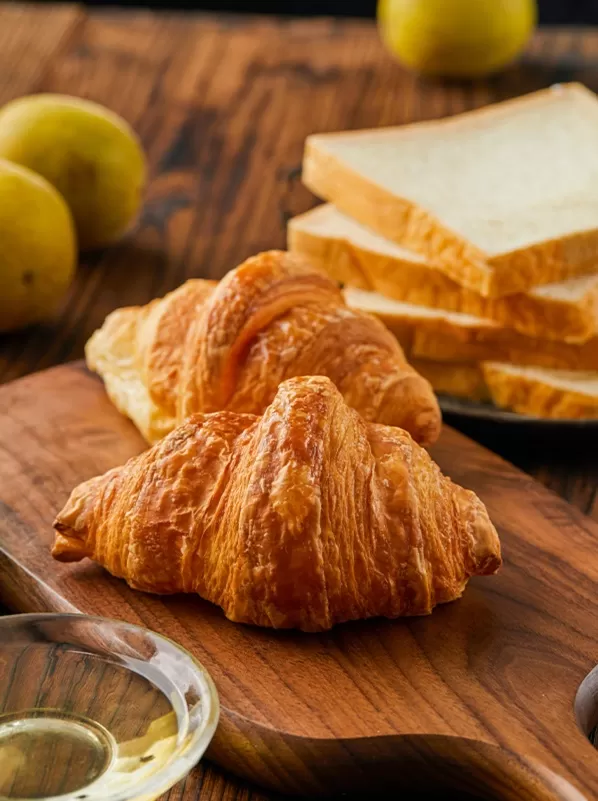
A high-intensity sweetener occupies very little formula space. When sucrose is reduced, the product may lose body, viscosity, solids, freezing-point control, browning, or moisture management. The formulation team should separate the sweetness problem from the structure problem and solve both deliberately.
In a beverage, this may mean adjusting acid, flavor, mouthfeel, or a complementary sweetener. In bakery, it may require bulking solids and changes to water, fat, leavening, or process time. HuachengBio also offers an H2-Luo monk fruit blend sweetener for teams that want to compare a blended sweetness system with a single stevia grade.
The final sweetener decision should be based on the complete formulation. A lower-cost powder can become the more expensive route if it requires a higher dose, extra masking, more development rounds, or tighter process controls to reach the same sensory target.
Inventory must be tied to an exact identity. When a buyer asks us for available stock, the request should include RA or RM grade, assay tolerance, quantity, packaging, destination, and required ship date. We can then match the enquiry to a specific supply option and provide the corresponding quotation and quality files.
A useful availability confirmation identifies the grade, lot or production allocation, release status, manufacture date, remaining shelf life, pack size, quantity, lead time, and Incoterm. It should also state whether the quoted quantity is reserved and how long the reservation remains valid. This prevents a sample approval from being linked to material that is no longer available when the purchase order is issued.
For repeat programs, the first shipment is only part of the supply question. Buyers should also confirm standard MOQ, normal production lead time, annual forecast, packaging continuity, and change-notification expectations. HuachengBio's industry-chain capabilities support a manufacturer-direct discussion about production and ongoing supply rather than a one-time spot purchase.
| Confirmation item | Required detail | Procurement value |
|---|---|---|
| Material identity | RA or RM grade, assay, test method | Prevents substitution with a different stevia profile. |
| Released quantity | Lot or allocation, available kilograms, release status | Separates saleable material from planned or pending production. |
| Shelf life | Manufacture date, expiry date, storage | Confirms usable life after transit and customer receipt. |
| Commercial terms | Pack size, MOQ, lead time, Incoterm | Makes the availability claim actionable for a purchase order. |
| Reservation | Quantity held and quotation validity | Protects the pilot schedule while internal approval is completed. |
| Repeat supply | Normal lead time, forecast, change control | Reduces risk after the first stock shipment. |
For buyer approval, we connect the offered material to a product specification and lot COA. Procurement and QA should also request the TDS, SDS, ingredient statement, allergen statement, country of origin, shelf-life and storage information, packaging details, and any destination-market declarations required by the finished product.
HuachengBio's quality system includes sensory, physicochemical, microbiological, and instrumental testing capabilities. The site lists HPLC, GC, atomic absorption, and UV-VIS equipment, together with certifications that include NSF-cGMP, ISO 9001, ISO 22000, BRC, Kosher, and Halal. For approval, buyers should check the current certificate holder, manufacturing site, scope, validity date, and coverage of the quoted grade.
A site certificate and a product COA answer different questions. The certificate describes the audited system and scope; the COA reports results for a released lot. Both should refer to the manufacturer and material under review. If a customer requires a specific regulatory statement or retailer questionnaire, include it in the RFQ so document readiness is confirmed before shipment planning.
A sample is useful only when its identity is traceable. Record the product name, RA or RM grade, assay, sample lot, requested dose, formulation version, processing conditions, and sensory result. This creates a reference that procurement, R&D, and QA can use when the pilot quantity arrives.
HuachengBio can provide a 10-20 g sample for detection and initial evaluation. For application work, confirm that the amount is sufficient for the planned trials and request additional material when pilot preparation requires it. The first commercial lot should be compared with the approved reference for identity, assay, appearance, dispersion, and the sensory attributes that matter in the finished product.
The purchase specification should define how a lot change is handled. If a new lot meets chemical limits but produces a noticeable sensory difference, the team needs an agreed retained sample, escalation route, and requalification rule. These controls protect launch timing without treating natural ingredient supply as perfectly uniform by assumption.
Bulk stevia extract should be compared at equal perceived sweetness in the finished product. Start with the supplier's recommended dose, then calculate ingredient cost per thousand servings or per metric ton of finished product. Add freight, import costs, incoming testing, premix preparation, yield loss, masking ingredients, and any extra development work needed to pass the sensory brief.
This calculation often changes the supplier decision. A higher-purity or different glycoside grade may cost more per kilogram but use less material or reduce the need for flavor correction. A lower-priced grade may still be the right choice when it performs well at the required sugar-reduction level. The result must come from the application trial and a complete commercial quotation.
A complete RFQ lets our sales, technical, and quality teams work from the same brief. State whether RA, RM, or both should be quoted. Include enough application data to recommend a sample and enough commercial data to confirm availability. This reduces back-and-forth and keeps the approved ingredient aligned with the purchase order.
Send HuachengBio your application brief, RA or RM preference, target sugar reduction, required quantity, destination, ship date, and document checklist. We will use those details to identify the relevant H2-Via specification, arrange a sample, and prepare a manufacturer-direct quotation with current availability.
Contact HuachengBio about bulk stevia extractH2-Via Stevia Extract is offered in RA 50%-99% and RM 95% specifications, with HPLC as the assay method. The suitable option depends on the finished product, sweetness target, sensory requirements, and cost-in-use target.
Send the exact RA or RM grade, assay tolerance, quantity, pack requirement, destination, and ship date. A usable confirmation should identify the offered material, released quantity or allocation, shelf life, lead time, Incoterm, and quotation validity.
RA is widely used and is available across a broad purity range. RM 95% offers a different sweetness profile that may suit more demanding sensory targets. Both should be compared at equal perceived sweetness in the actual product base.
Yes, but the application work is different. Beverage trials should check pH, clarity, flavor release, heat treatment, and storage. Bakery trials must also rebuild sugar's bulk, browning, moisture, spread, and texture functions.
Request the signed specification, lot COA, TDS, SDS, ingredient and allergen statements, origin, storage and shelf-life information, packaging details, current certificates, and any declarations required for the destination market.
HuachengBio can provide a 10-20 g sample for detection and initial evaluation. Confirm the number of formulations and replicates planned so the sample quantity is sufficient for analytical, sensory, and stability work.
The right stevia purchase connects one defined grade to one traceable sample, one approved specification, and a repeatable commercial supply plan. Send the application and order details first so availability, performance, documents, and price can be evaluated together.







 EN
EN EN
EN CN
CN ES
ES PT
PT SV
SV DE
DE TR
TR FR
FR AR
AR BG
BG HR
HR CS
CS DA
DA NL
NL FI
FI EL
EL HI
HI IT
IT JA
JA KO
KO NO
NO PL
PL RO
RO RU
RU CA
CA TL
TL IW
IW ID
ID LV
LV LT
LT SR
SR SK
SK SL
SL UK
UK VI
VI SQ
SQ ET
ET GL
GL HU
HU MT
MT TH
TH FA
FA AF
AF MS
MS GA
GA BE
BE UZ
UZ